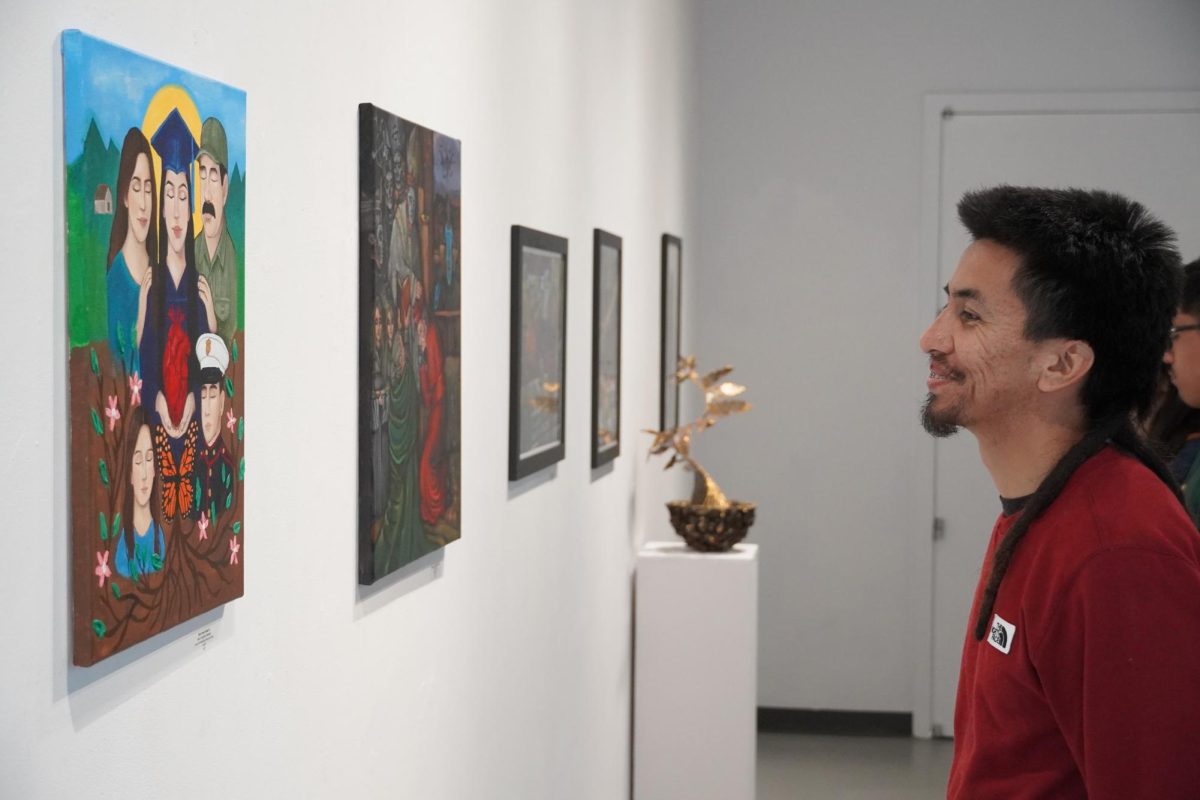
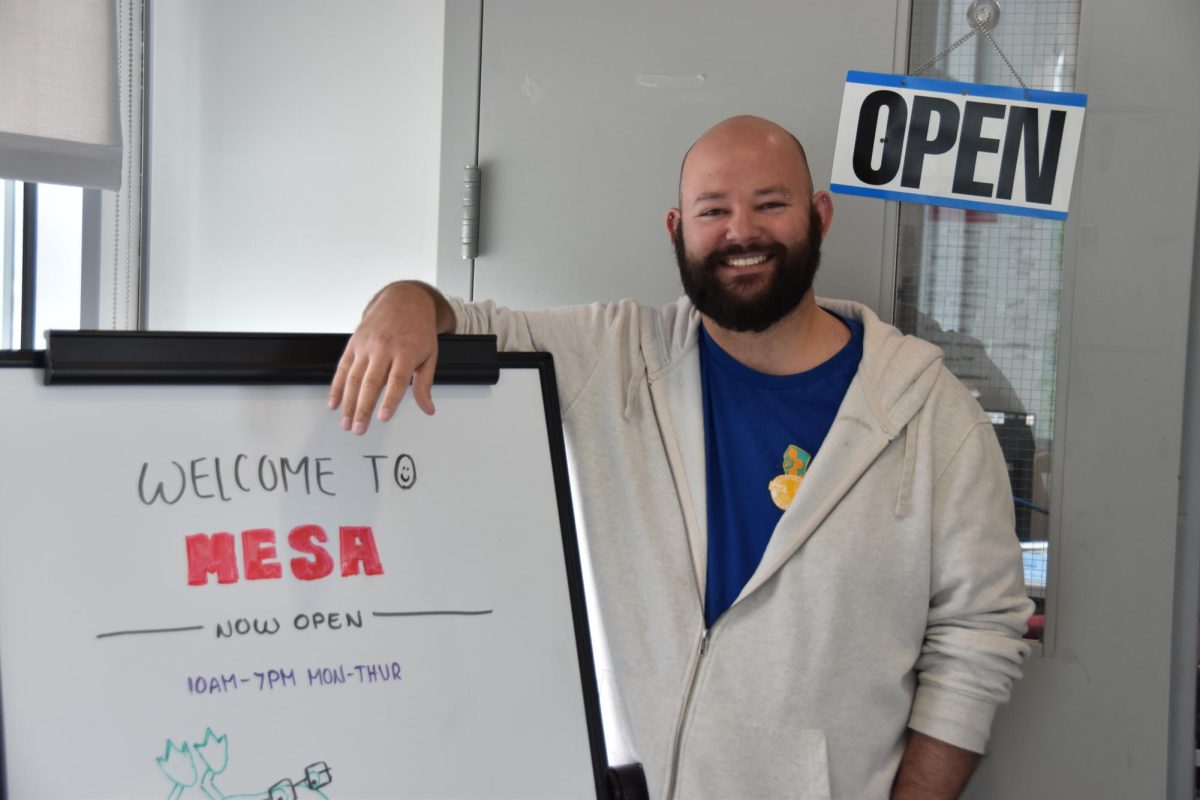
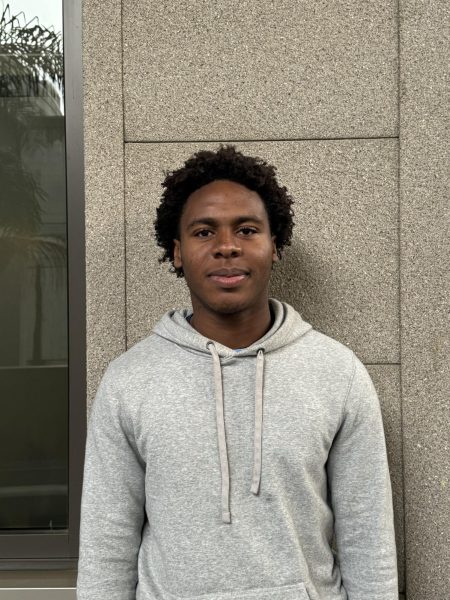
On a quiet afternoon, the Los Medanos College Art Gallery sits mostly bare, its white walls echoing with each step across the floor. The space feels open, almost unfinished.
But as artwork begins to arrive and lights are adjusted piece by piece, that emptiness starts to shift. Slowly, the gallery comes to life.
For Sarah Lee, bringing that space to life is a careful, deliberate process. As the gallery director, she oversees everything from selecting artwork to designing how it is displayed.
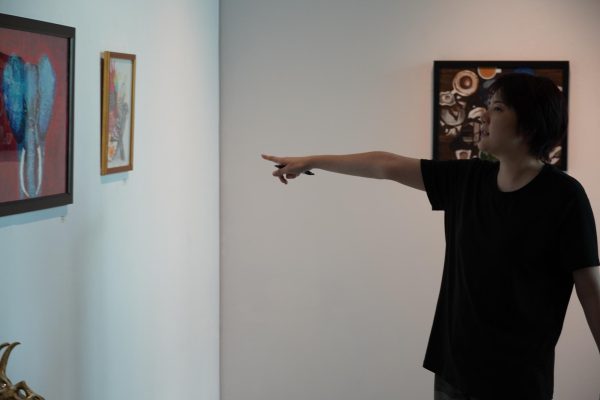
“Installing it, curating it is really fun,” Lee said. “It’s like putting together a theater stage for the grand show.”
Each exhibition begins long before any artwork is placed on the walls. Students submit their work digitally, and a guest juror selects which pieces will be included. From there, Lee works to shape the gallery into a cohesive experience, considering how each piece interacts with the others.
“It’s about making sure the works flow to the eyes,” Lee said. “Nothing is competing.”
That balance is not always easy. Sculptures and ceramics, for example, are meant to be viewed from multiple angles, but space and safety constraints often require them to be placed against walls.
At the same time, paintings and other two-dimensional works need enough room to stand out without overwhelming the viewer.
“You want to do the artist justice,” Lee said. “But you also have to think about how people move through the space.”
While Lee leads the process, much of the hands-on work is done by student workers and volunteers who help transform the gallery from an empty room into a finished exhibition.
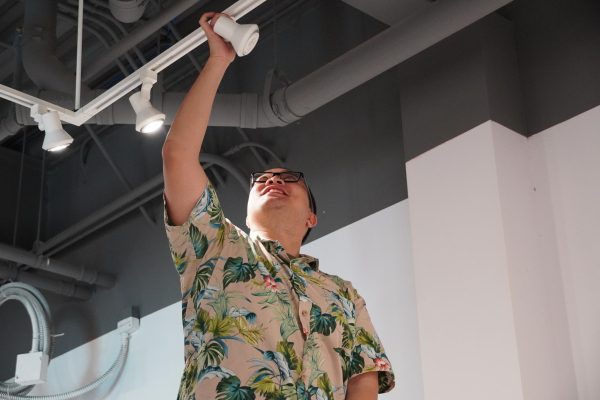
Jordan Castro, a student worker in the art department, said the setup process is different every time.
“Every single show, there’s always going to be a new challenge,” Castro said. “Artists are very different, so we’ve learned how to adapt and make the artist shine.”
Castro, who has also exhibited his own work, said the most rewarding part comes once everything is complete.
“When the showing is all done and people come in, that’s the best part,” he said. “We’re out here to set the artist up for success.”
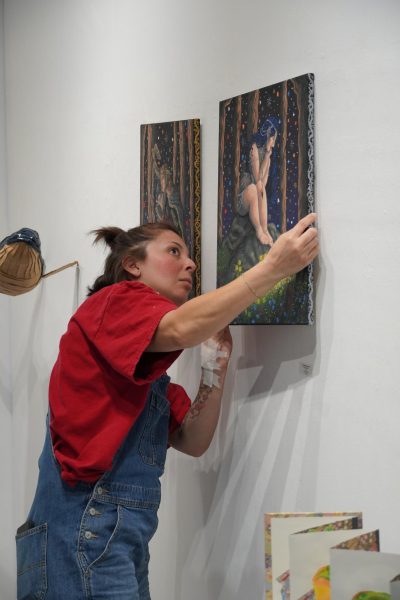
For student artists, the experience goes beyond just having their work displayed. Dasha Shevchenko, an art major who also assists with gallery setup, said planning and attention to detail are key to building a strong exhibition.
“Pre-planning where everything goes is very important,” Shevchenko said. “You want balance. You don’t want one area to feel overwhelming and another to feel empty.”
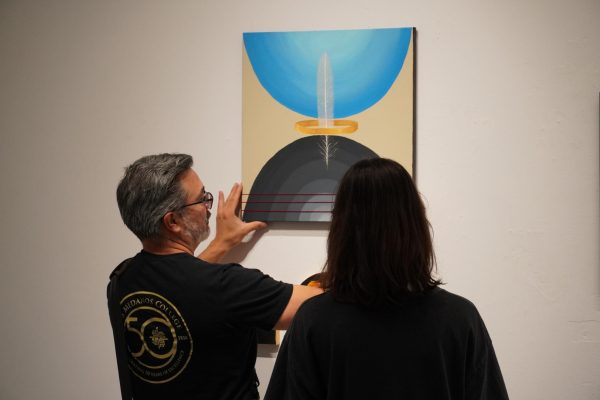
Shevchenko, who has exhibited her own acrylic painting in past shows, said seeing the finished gallery is especially satisfying.
“Walking through it after everything is done, like you’re seeing it for the first time, that’s very satisfying,” she said.
This semester’s exhibition, which opened April 15, highlights student work selected by a guest juror, a process that often shapes the tone of the show.
Different jurors bring different artistic perspectives, leading to noticeable shifts in style from one exhibition to the next.
The result is a gallery that reflects not only the creativity of the students but also the curatorial vision behind the scenes.
What sets this exhibition apart, however, is an added interactive element that invites visitors to become part of the artwork itself.
Cesar Reyes, senior lab coordinator for art, drama and journalism, said the goal was to create a space where visitors could actively engage with the exhibit.
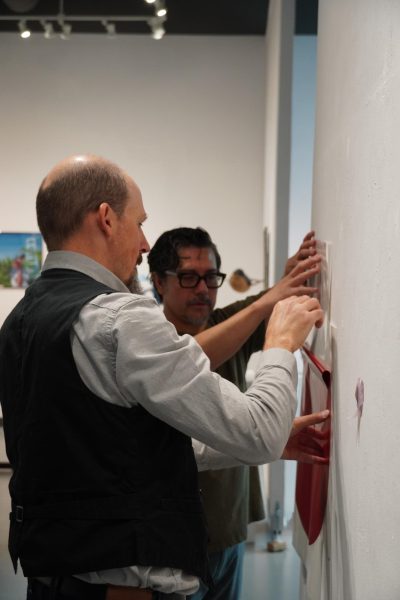
“We created sort of a sandbox,” Reyes said. “People can come in and play inside of that.”
Working alongside him, Nick Nabas helped develop the concept, drawing inspiration from artist Yayoi Kusama and her participatory installations.
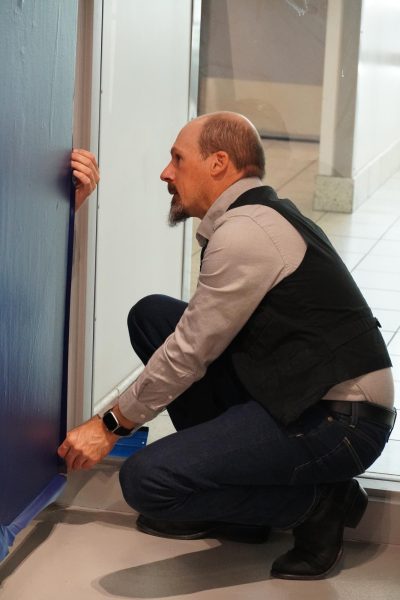
“Usually you’re not supposed to touch anything,” Nabas said. “This flips that idea and lets people add to the composition however they want.”
The interactive wall allows visitors to place shapes and alter the piece over time, turning it into what Nabas described as a “living wall” that changes with each person who contributes.
For faculty and students, the hope is that this kind of engagement encourages more people to see themselves as part of the art world.
“Hopefully they get inspired,” Nabas said. “They realize they can create too.”
That idea that art is not limited to those already involved in it is central to the gallery’s role on campus.
As a public space, the gallery regularly draws not only students but also visitors from the community, offering an accessible entry point into the arts.
Through each exhibition, whether carefully curated or collaboratively created, the goal remains the same: to make art feel open, shared and possible for everyone.
The 2026 Student Art Exhibition is open in the LMC Art Gallery until May 13.
The gallery hours are Monday-Wednesday from 1 to 4 p.m.