Students from Los Medanos College joined some of the top community college researchers in California this year after four honors students were selected to present their projects at the statewide Honors Research Symposium hosted at Stanford University.
The symposium featured fewer than 100 student presentations selected from proposals submitted by community college honors students across California. Throughout the day, students, faculty and attendees moved between themed presentation rooms where presenters shared research projects ranging from environmental sustainability to mental health literacy and biomechanics.
After an opening ceremony and keynote speech from Tagart Cain Sobotka, attendees participated in three presentation sessions held throughout the day. Each session grouped projects with similar themes together, allowing audience members to choose rooms based on their academic interests. Presenters spoke for roughly 15 minutes before participating in a collective question-and-answer discussion with the audience.
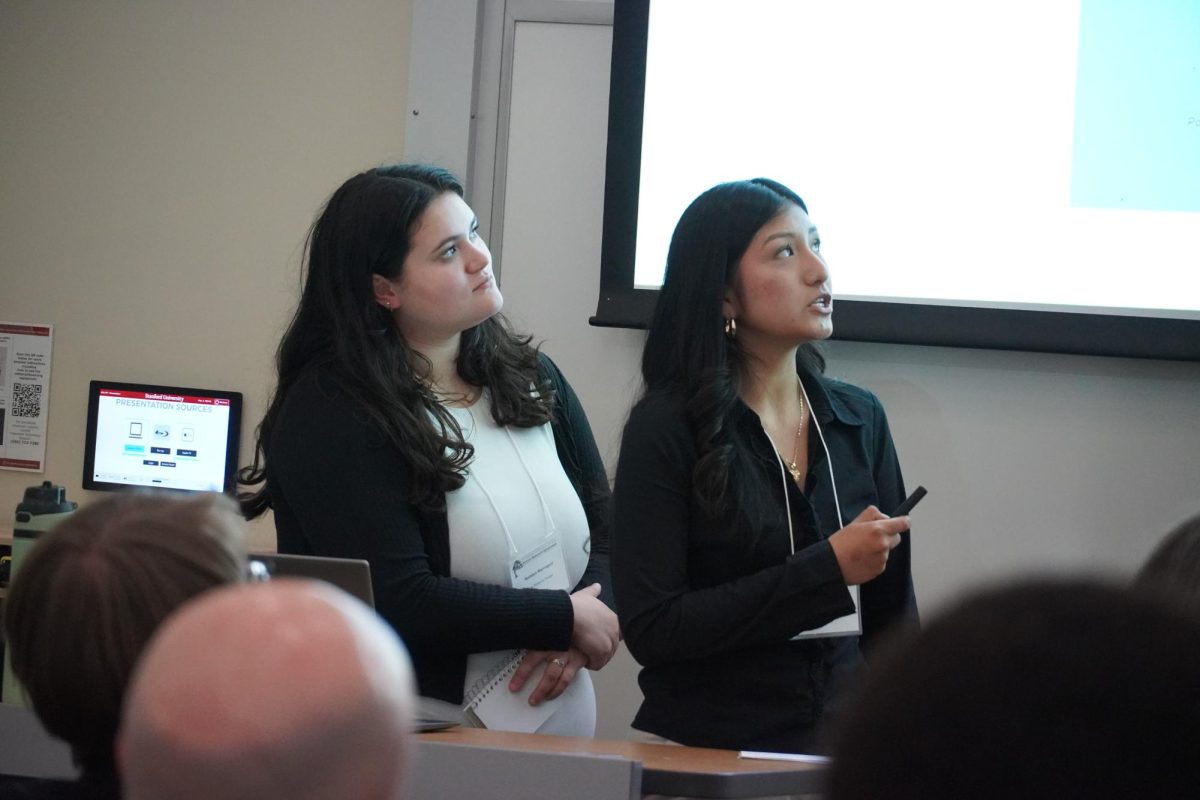
LMC students selected for the symposium included Alyssa King, who presented “Bridging the Health Literacy Gap: A Comparative Analysis of Mental Health Care Literacy Resources in the Bay Area,” Natalie Oliver, who presented “Progressing with Pain: Biomechanical and Psychological Adjustments for Martial Artists with Sciatica,” Jenica Perez, who presented “Rooted in Change: A Student’s Guide to Sustainable Campus Landscapes,” and Valerie Macha Ramos and Natalya Marroquin, who co-presented “Guardians of the Delta: How Land Management Practices Promote Biodiversity in Wetland Environments.”
Each presenter worked closely with a faculty mentor while developing their projects.
Tiffany Morgan mentored Perez on her sustainability project, which grew out of work originally completed in an honors philosophy course focused on environmental ethics.
“I think it’s really cool to just see how diverse the presentations are,” Morgan said. “Despite being on pretty similar topics and grouped together, just how differently people answer questions and what kind of questions they ask.”
Morgan said Perez’s project stood out because it focused not only on ideas but on real campus implementation. Perez participated in sustainability committee meetings and contributed actionable proposals for improving sustainable landscaping practices on campus.
“I’m incredibly proud of her,” Morgan said. “It’s awesome to see how professional and put together she was in the presentation and giving real actionable steps and action plans for other people to follow.”
Perez, a fourth-year civil engineering student, said the project was inspired by frustrations over the lack of progress toward sustainability goals in many cities and institutions.
“Sustainability is really prevalent and it’s a big necessity for our future generations to maintain that biodiverse space,” Perez said.
She added that presenting at the symposium helped strengthen both her public speaking skills and confidence in pursuing environmental work professionally.
“This experience actually helped me grow a lot in terms of being able to work on a big project like this,” Perez said.
For Marroquin and Ramos, the symposium was both an academic opportunity and a chance to step outside of their comfort zones. Their research explored biodiversity and wetland management practices within Delta ecosystems.
“I kind of just wanted to take the risk,” Marroquin said. “I’ve never done presentations like this before.”
Ramos said research experiences like the symposium improve students’ ability to communicate complex scientific ideas to wider audiences.
“I think it helps me communicate science to a diverse group of people in an easier way,” Ramos said.
Attendees also reflected on the symposium’s broader impact. Aaliyah Dacasin, who attended but did not present, said the event exposed students to a wide variety of research topics and perspectives.
“With there being three different presentation sessions, I was able to sit in on presentations that both aligned with my major in STEM and those outside of it,” Dacasin said.
Dacasin added that seeing fellow LMC students present research at one of the country’s top universities made the experience even more meaningful.
“I think it was nice to know that they had put in so much time and effort and passion into the research,” Dacasin said, “and it had led them to present it in front of students they didn’t know at one of the top universities in the country.”