The Los Medanos College Multicultural Festival brought a lively celebration of cultures to campus Wednesday, March 18 at 5:30 p.m., bringing together students, staff and community members through food, performances and experiences.
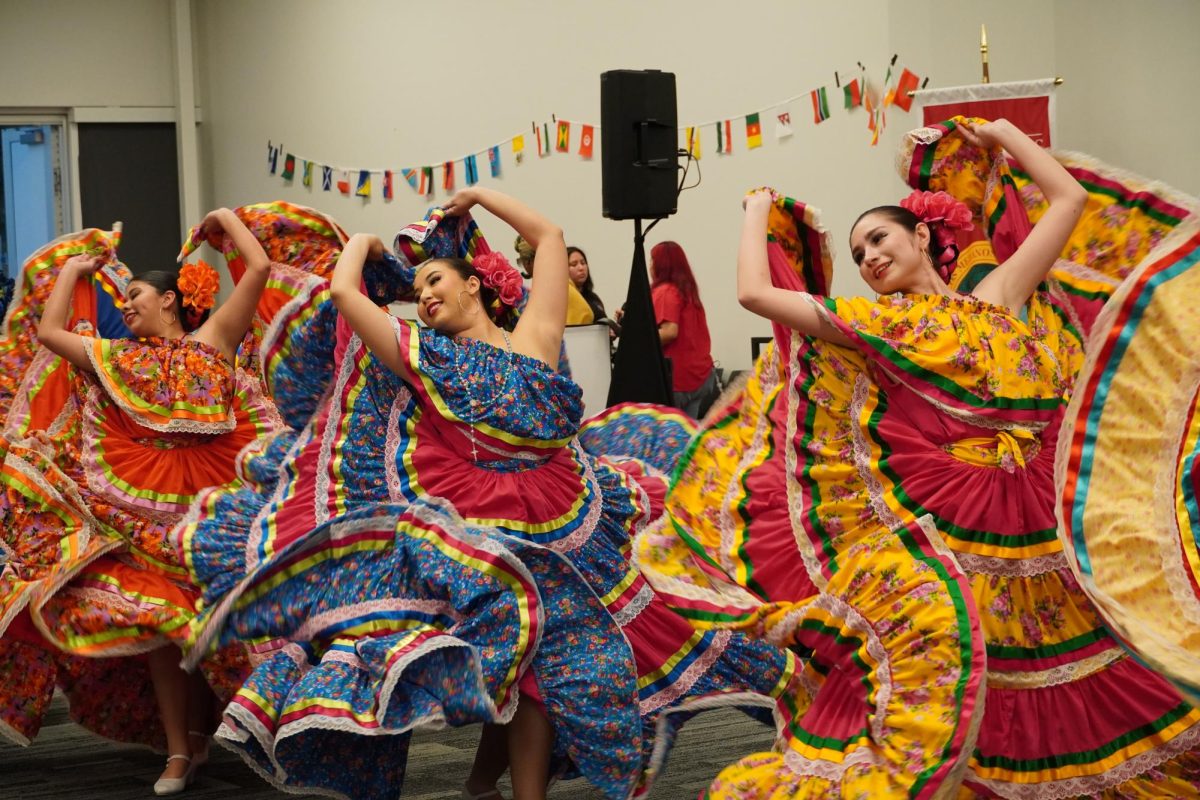
The event had a wide range of cultural foods, including dishes such as Jamaican jerk chicken and El Salvador pupusas. Attendees also enjoyed vibrant performances from groups including Comrade Lover Lion Dancers, Irish Dancers and Pittsburg High School’s Folkorico dancers.
“They blow me away every year,” said event organizer and LMC Honors coordinator Jennifer Saito. “What I thought was super cool about this year, which was totally new, was the audience participation.”
Audience members were able to participate in salsa dance lessons with the LMC band and an energetic Capoeira Luandra martial arts performance.
“It’s really nice to see a lot of different cultural dances, you know, expansive horizons and lets you see something that you normally wouldn’t see in everyday life.” said Letta Greene, senior program coordinator and one of the main event organizers.
Food was a major highlight of the festival. Attendees received four tickets to sample different dishes, and leftover food was available for attendees to take home. Campus clubs also hosted fundraising opportunities selling snacks, drinks, ice cream and food items.
“My favorite food here so far was Indian food, it’s really good.” said attendee Hayden Steers.
The Indian food provided was by local Brentwood business Biryani Pot and included dishes such as Chicken 65, a spicy deep-fried chicken dish, and mini samosas.
“My favorite food was the Lumpiang Shangai,” said journalism major Jianna Gray.
A favorite for many Filipinos and those who enjoy Filipino food, Lumpiang Shanghai is a deep-fried eggroll usually containing pork and vegetables inspired by China and is a staple dish in the Philippines.
“I think it’s important to highlight the cultural foods here.” Gray said.
The event also served as a platform for organizations to share their missions such as the Black Student Union.
“We are selling water and lemonade in commemoration of the Atlanta Waterboys,” said BSU Vice President Sierra Churchill. “There are young boys in Atlanta that sell water during the harder times of the year to create income for themselves because in a lot of marginalized communities, the opportunities provided are not exactly safe.”
Every small food item such as Lemonade had a part in the program.
“Another part is that many of our professional sports teams in the early ‘50s and ‘60s, because of lack of funds, would go out and sell lemonade to pay for uniforms and everything after competing, because they only got paid during the season.” said Cameron Turner, a member of the BSU.
Throughout the event, community and representation was a central theme.
“Everyone deserves a space to be able to see and express themselves,” said Amisatu Kamara, a member of the Umoja Scholars who helped serve Fire Spice’s jerk chicken and plantains at the Jamaica table. “We have so many different faces, cultures, ethnicities, here at the school so I think that we’re lucky to be able to have a local business, Fire Spice, be here as well as all the other restaurants.”
“One of the things that’s so special about LMC is the incredible diversity of our community. I think this event celebrates diversity in everyone’s favorite way, food and entertainment,” said Jennifer Saito.
Organizing the event was no easy feat according to Saito.
“There was a whole committee dedicated to planning this event. I think we even started last semester. We met weekly leading up to it.” Saito said.
Greene added that the success of the event was from a lot of input and a lot of cooperation across multiple departments on campus.
“We’re a community college right? This is how you build community by showing the similarities and the points where people can come together, enjoy being together. I think it’s really important that even though we’re different, it’s all the different cultures that make the United States, and it’s all these different cultures that make our community right?” said Greene. “It makes us who we are.”