In a fractured political landscape, the average person is bombarded with information from various media sources, making it more critical than ever to be properly informed.
In the Fact Over Fiction presentation, Shawn Gilbert said, “We put these people in, but once they’re in, we the people should know what’s going on, so we can hold them accountable for doing corrupt activities that would harm us.”
Gilbert and Ana Pan are co-chairs of the Diablo Valley branch of the League of Women Voters. The organization is a nonpartisan political organization that emerged from the suffrage movement. Their mission is to educate voters and defend aspects of democracy.
“We’re all about education and informing the people so they can make informed, good votes about who they want to support as a candidate, and what policies they see as important to a society,” said Gilbert.
The political organization does more than give educational presentations. “So in addition to tabling, which is registering new voters or re-registering them, if they’ve moved, we do a lot of educational presentations. We also do pros and cons, which are on the propositions,” said Pan
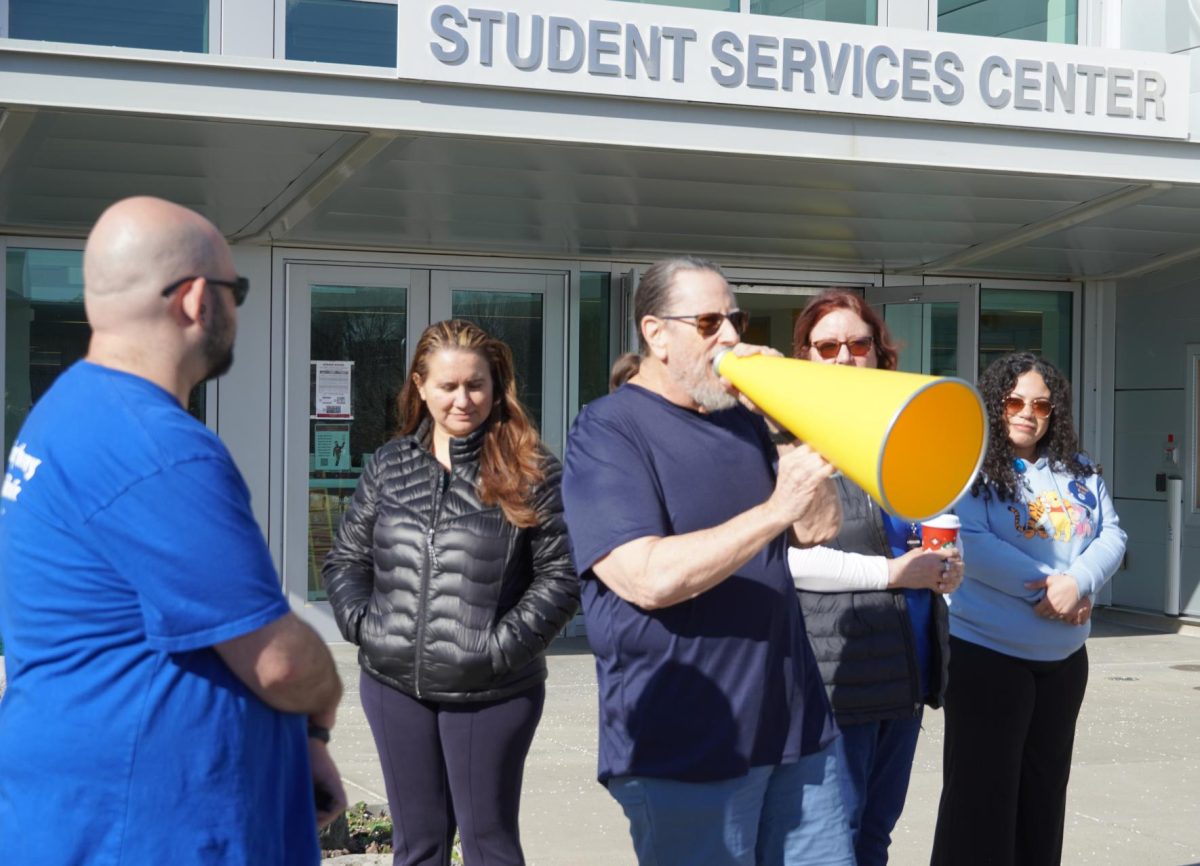
The event, titled ‘Fact over Fiction: Navigating the News,’ took place in the core building on LMC campus. The presentation focused on how to apply critical thinking to verify reputable sources.
“It’s actually looking at media and how we are all being inundated with lots of media, but also that there’s a lot of mis and disinformation. And how do you find the facts?” said Gilbert
Jaylee Gartner, an LMC student, saw a flyer of the event on her school’s portal and decided to attend the presentation.
“I came to this event because, honestly, with the climate and politics right now, I think it’s really important that people can have the skills to navigate the biases in the news.”
The speaker began the presentation by providing a historical context for the importance of journalism. She discussed the New York Times’ publication of the Pentagon Papers in 1971 and the Watergate Scandal, exposed by the Washington Post.
“So their oversight, and their investigations, and asking people questions and finding and digging is all about holding power accountable,” said Gilbert.
The next section of the presentation was about the importance of objective truth and common facts. The speaker emphasizes examples of universal truths, such as the existence of gravity.
“These are the realities of life, and we’re dependent upon all of them as the truth that we share, and when they get distorted, it erodes our sense of trust and ultimately our sense in supporting democracy, because we’re just in chaos and confusion,” said Gilbert.
The medium is the message, she said. Gilbert discusses how the media disseminates outrageous and untrue fiction to capture our attention.
“It’s not the message, per se, it’s how we perceive it and how it affects us,” said Gilbert.
She then went on to discuss social media and how it spreads disinformation, most influencers tend to gravitate public attention with outrageous and modified information. This is why most misinformation is spread on many social media platforms. She notes that conspiracy theories and speculations impact public perception. People must practice critical thinking.
Critical thinking and fact-checking were emphasized by Pan. This means verifying the accuracy of information online and ensuring that journalistic coverage is both balanced and unbiased.
Multiple sources, accuracy and avoiding bias, are essential in the information we consume, Pan said. People should have a healthy news diet and consume media with balanced coverage, while also being aware of propaganda and avoiding it.
Most media companies are owned by major corporations, Pan said, which distorts the news. She explained that independent news sources are important because they are more likely to cover a story accurately. She stresses the importance of critical thinking when using social media.
The call to action at the end is to practice self-discipline and critical thinking to verify sources online and question media that may have some samples of propaganda.
Ultimately, the speakers addressed the group of three students and held a brief discussion on their final thoughts. One of the students asked how to know if a political figure is earnestly supporting a group of survivors.
“I think you have to take each situation and look at the merits of that particular situation again, no matter who it is, whether they’re Republicans, democrats, or independents. You always have to apply critical thinking,” said Gilbert.