“Sinners,” directed by Bay Area native Ryan Coogler, was screened at Los Medanos College in the Student Union following a panel presented by faculty and staff. The supernatural horror movie follows a pair of twin brothers, Smoke and Stack, who return to their hometown in Mississippi to establish a juke joint during the height of the Jim Crow era, only to face an even darker threat when vampires attack.
The movie explores themes of racism and community. Both brothers are played by Michael B. Jordan, who won the Oscar for Best Actor in this role.
The screening took place April 16 from 3:30 p.m. to 7:15 p.m. and was presented by the Office of Diversity, Equity, Inclusion and Belonging, the Department of Ethnic and Social Justice Studies and the Department of Social Science.
Free pizza, soda, candy and snacks were provided to attendees, particularly those who registered early. Some professors also offered extra credit to students who attended the screening and panel.
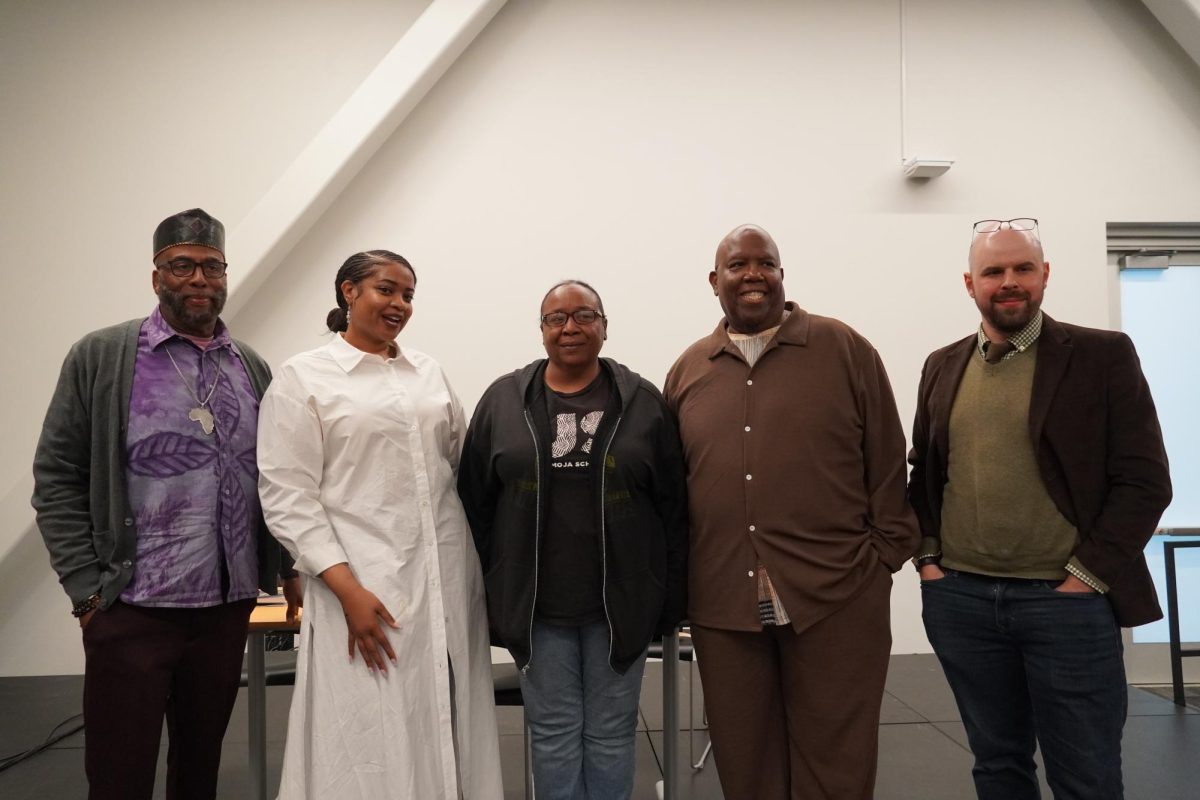
According to history professor Russell Weber, the film is historically accurate, as far as vampire movies go. “The one about vampires is one of the most historically accurate films I’ve seen in the past ten years because Coogler does this interesting thing where he grounds you into the past, without drawing attention to it,” he said during the panel.
Weber also referenced historical aspects of Asian American life in the Jim Crow South. “For example, the Asian family in the film has two shops, one for white patrons and one for black patrons because segregation is still alive in racial apartheid Jim Crow south and Coogler doesn’t draw attention to that, it just happens.” said Weber.
Dr. Terence Elliot, a music professor at LMC, offered a different perspective, focusing on the movie’s sound. “It really hit home for me as a musician, just hearing and feeling it. So when we think about when we dance and sing, it really connects us to being African. You can take the African out of Africa, but not the African out of the African.” said Elliot.
Music professor Silvester Carl Henderson, who first watched “Sinners” on a plane, described the film as a struggle between good and evil. “Not in a ‘the juke joints are bad’ or a ‘the church is evil’ type of manner but as believing in something and understanding that what you’re believing in is really not what you see… When the vampires came from the people they saw and knew originally, they think, ‘Oh I like this person’ but then that person turns around to be someone that captures you and turns you into this monster.” he said.
Jamila Stewart, Umoja Scholars coordinator, said that music, a major theme in “Sinners”, plays a significant role in her life. For Stewart, the film’s message was to further educate her and her community because to Stewart, there’s so much history, especially in America, that we think we understand, but we do not. “These [Black] stories are being taken out of curriculums or reworked. So education is something I’ll take away from this film.” she said.
Ethnic studies professor Taylor Jackson, the panel’s moderator, said “Sinners” humanizes the Black experience. “It shows how music is something that really bridged us to a history that we were forcibly removed from,” she said. “And I think it does it in a way that is so beautiful and teaches on so many different themes and allows black people not only see themselves but have a deeper understanding of their things.” she said.