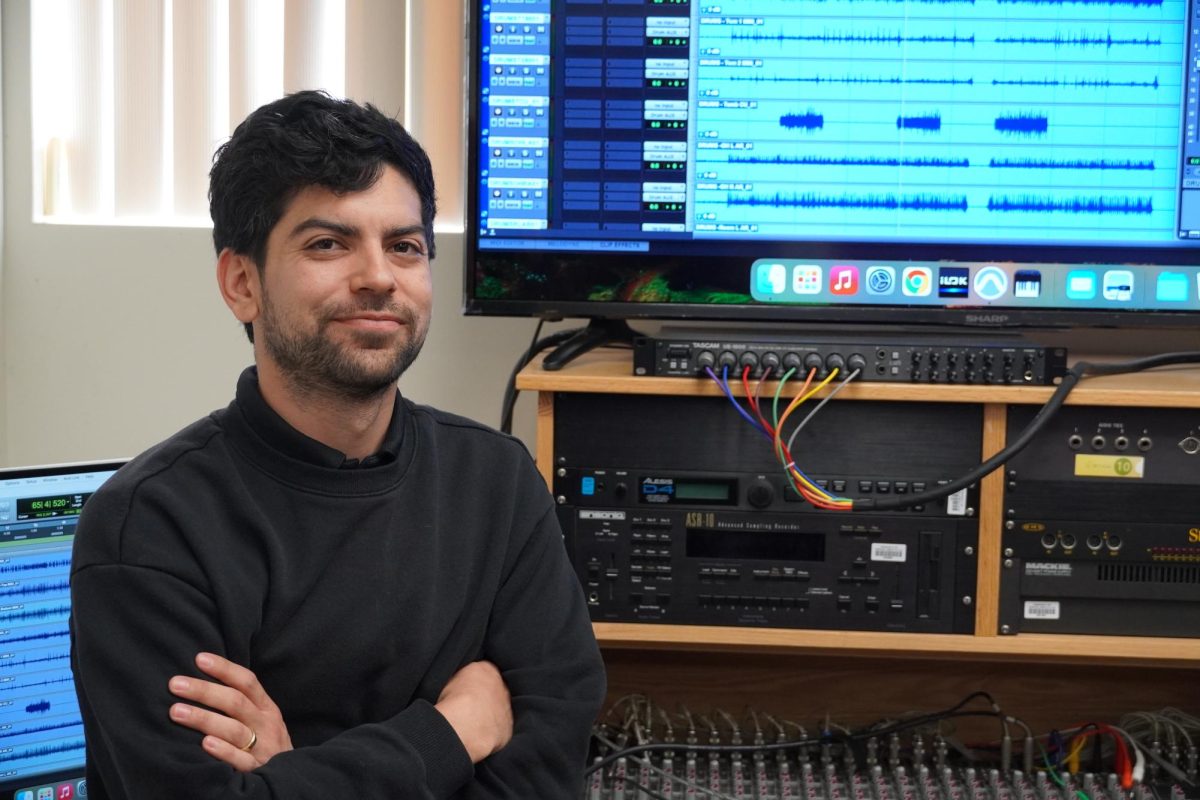
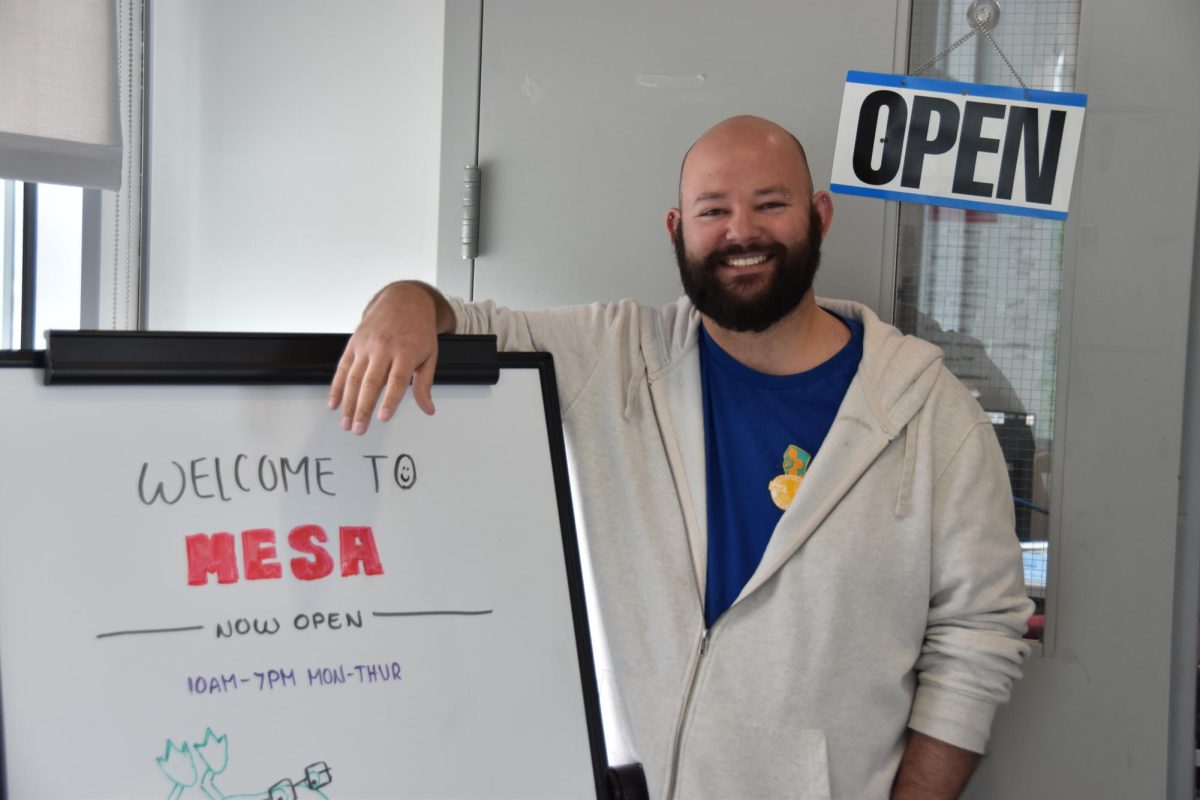
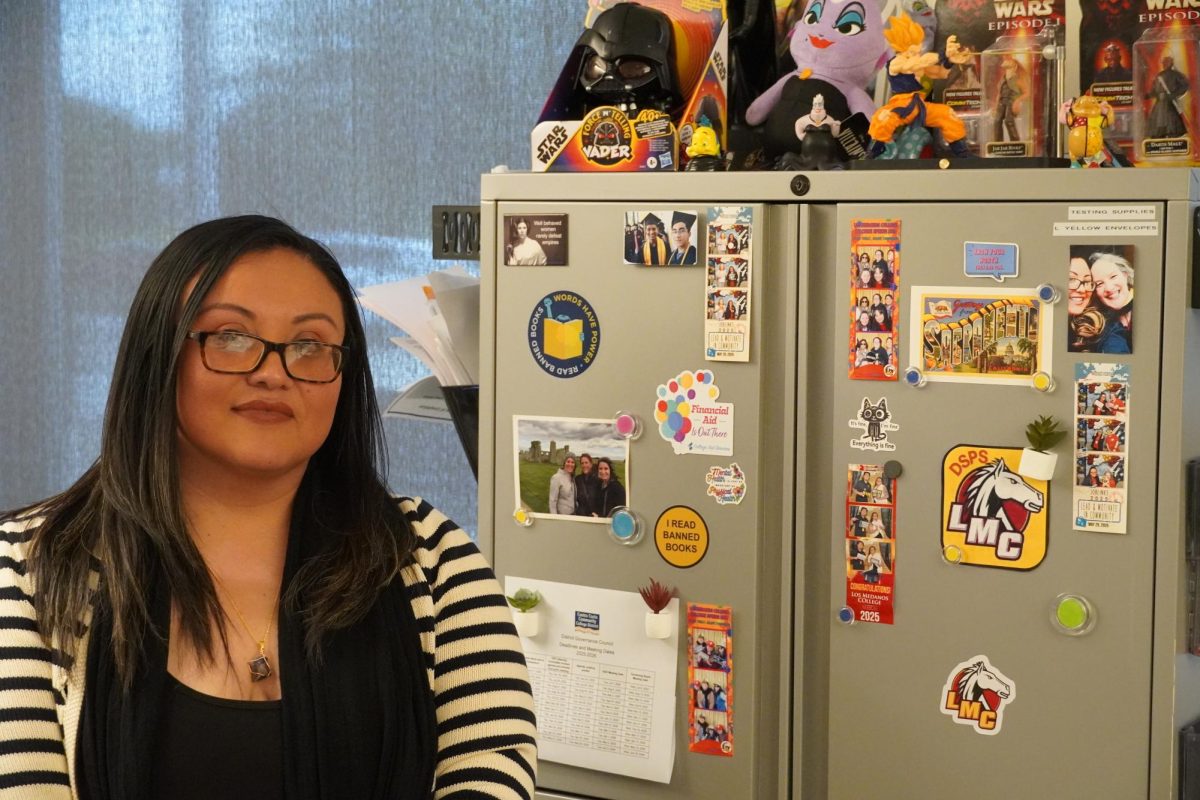
In the Los Medanos curriculum, the importance of history and ethnic backgrounds is valued. Learning about other cultures creates empathy, compassion for others, and broadens your understanding of others. This is what Max Trujillo’s mission is at LMC.
Trujillo’s passion started primarily when he was young. After becoming a karate teacher at his local dojo, he was inspired by his uncles to become a teacher. “My uncles and mom instilled in me the ability to teach; this inspired me to reach the goal of becoming a teacher,” he says.
Trujillo has been working in the 4CD district since 2018, starting as a full time classified staff working with the Upward Program at DVC. In later years he became a part time faculty member in the department of Ethnic Studies and Social Justice Studies at LMC, before becoming a full time faculty member in 2023. Trujillo is now in his third year as a full-time tenure-track faculty member.
He grew up in a single-parent household, raised predominantly by his mother and older sister. Trujillo’s mother instilled in him the importance of family, not just those related by blood. During his journey in academia, he was able to connect with various professors who solidified his passion for teaching.
Although Trujillo was a history major, he was inspired to minor in African American studies, which assisted him in understanding the cultures around him. “My professors, Dr. Dailey and Dr. Chew, solidified my passion to teach at collegiate level,” he says.
As a first-generation college student who graduated top of his class, Trujillo had the courage and motivation to pour into his community. With the passion and drive to instill change in students, he became a part-time faculty member at LMC and continued in the 4C district.
“It’s important to connect back to their heritage, who and where you’re people come from,” Trujillo says, “…holding onto that will help in teaching future generations about heritage and where you’re people are going to go. All of us are more than meets the eye.”
He continued in his journey, becoming a full-time faculty member 2 years ago. Since then, Trujillo has been able to inspire students to attend Ethnic studies in order to better understand the world around them. “In our Black studies course, we discussed the significance of intersectionality, the way in which we have to uplift your brothers and sisters within this community,” he says, “This aids in the mutual understanding that we can all make a difference to create systemic change.”
In regard to K-12 education, Trujillo believes that there should be more inclusivity and encourages diversity when it comes to the required courses, “There needs to be more access to quality education within the K-12 education,” he says, “There is still a lot of work that needs to be done, to showcase interconnectedness in community.”
Trujillo also believes that this work is already being done on college campuses. “The education system is becoming more inclusive. It’s giving students the opportunity to understand and empathize with people within various communities.”
Some other major social issues that many people of color face, he notes, are access to housing, health, education, and wages. “These are disparities within the BIPOC community that need to be rectified.”
Trujillo has travelled to Mexico and Hawaii to find edification and connect to the communities within. “What stood out to me was being able to attend an event,” he says, “There was a fight for the indigenous Hawaiian people (land, water and environment), and the work they’re doing is critical.”
Taking a breath, Trujillo continues, emphasizing: “…we only have one world, we need to take care of it.”
He expresses another of his beliefs: “We have to be compassionate, we must be willing to support others throughout the world and society. Some disregard the problems that some face, regardless of that, help one another.”
Some major milestones that Trujillo had in his lifetime were his uncles who encouraged him to become a teacher in the dojo, his mother who pushed him to become the best version of himself, and many professors during his undergraduate and graduate studies. He also ran a youth mentorship program called Alpha Academy via his fraternity mentorship program in Solano County.
One of his key goals in life is “letting students know they can make a difference in the world and gathering what we have learned in Black studies and bringing it back to the community.”
He also wants students to know that they, too, can be “future changemakers.”
As a professor at LMC, Trujillo hopes to instill in students the ability to learn, the ability to hope, and the ability to pour those aspects out onto the community at large. He also hopes to “mentor students, being someone to talk to about subjects in school and in life and support them in reaching an academic goals.”
If you’re thinking of taking an Ethnic studies course, ask for Professor Max Trujillo. He will assist you in understanding the world and instill compassion for those who need it, assist you in becoming a change maker, and having the courage to be the voice for your community, no matter how big or small.